Here is a story we hear from detailers all the time. You buy a DI tank for around $400, and it works great for a few washes. Then the water starts reading 100, 200, even 400 TDS, the spots come back, and you are dumping out the old resin, refilling it, and paying for more. Sound familiar?
The tank is not the problem. The problem is what you are feeding it. Here is why DI-only setups keep running out, and how adding RO fixes it.
Why a DI Tank Runs Out So Fast
DI resin removes dissolved minerals by trading them for pure water, and every mineral it grabs uses up a little of the resin. Hard tap water, with hundreds of PPM of dissolved solids, uses it up quickly. When tap water is around 400 TDS, a DI-only tank is doing all of the work by itself, so you are constantly buying resin, swapping it, and cleaning out the tank.
That is a bad trade for a working detailer. It costs money, and every refill is time you are not detailing.
The Hidden Cost: Saving Water for the Final Rinse Only
When resin is expensive and runs out fast, detailers start rationing. They wash with tap water and use pure water only for the final rinse. Two things go wrong:
- The final rinse barely covers the vehicle. A small supply of pure water does not go far on a truck, an SUV or a boat.
- The soap gets weak. Minerals in tap water make soap work less well, and diluting it with limited water makes it thinner. Your foam is not thick, and it does not hold on the paint.
Pure water helps your soap lather better and rinse cleaner, so using it only at the end means you are missing most of the benefit.
How Adding RO Fixes It
A reverse osmosis (RO) system removes most dissolved minerals, typically 90 to 98 percent, before the water ever reaches your DI resin. Because the resin only has to polish what the RO leaves behind, it lasts far longer. That means:
- Fewer resin changes. You spend less time dumping and refilling, and less money on resin.
- Pure water for the whole wash. A properly sized system gives you enough pure water to mix thick soap and rinse the entire vehicle, not just finish it.
- A true spot-free finish. Vehicles can air-dry in the sun, with no towel drying, which also cuts down on swirl marks and micro-marring.
RO vs. DI vs. RO/DI at a Glance
| Setup | Water quality | Resin use | Best for |
|---|---|---|---|
| DI only | Near 0 PPM while resin is fresh | High on hard water | Low-volume use or already-soft water |
| RO only | Much cleaner than tap, not zero | None | General rinsing where a few PPM is acceptable |
| RO/DI | Near 0 PPM | Much lower than DI alone | Mobile detailers who want a true spot-free rinse |
How to Know When Your Resin Is Spent
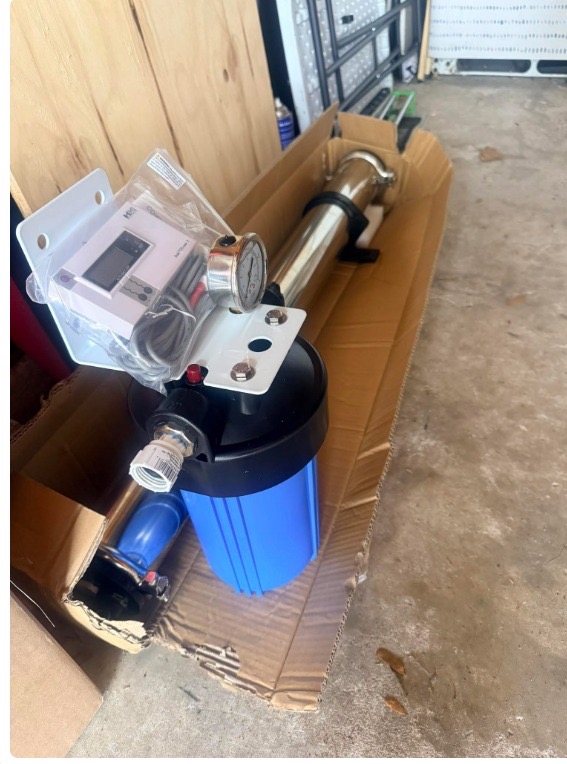
Use a TDS meter. Fresh DI resin reads 0 PPM at the outlet. When the reading climbs above zero, the resin is wearing out and spots can start to appear. A dual inline tester reads the water before and after the filter, so you can watch it as you work and change resin at the right time, not too early and not too late.
Before You Buy Another Tank
Check your tap water TDS first. It only takes a minute with a meter, and it tells you how hard your resin will have to work. If your water is high, adding RO is usually cheaper over time than replacing resin again and again.
Talk to Taylor Before You Spend More
At Taylor Mobile Detail we build and use RO water systems every day. If you are tired of burning through resin, or want enough pure water for the whole wash, call us for a free consultation and we will talk through your setup. You can also see our R.O. water filtration systems.
Related reading: DI filter vs. RO/DI for car detailing and how to test your tap water TDS.